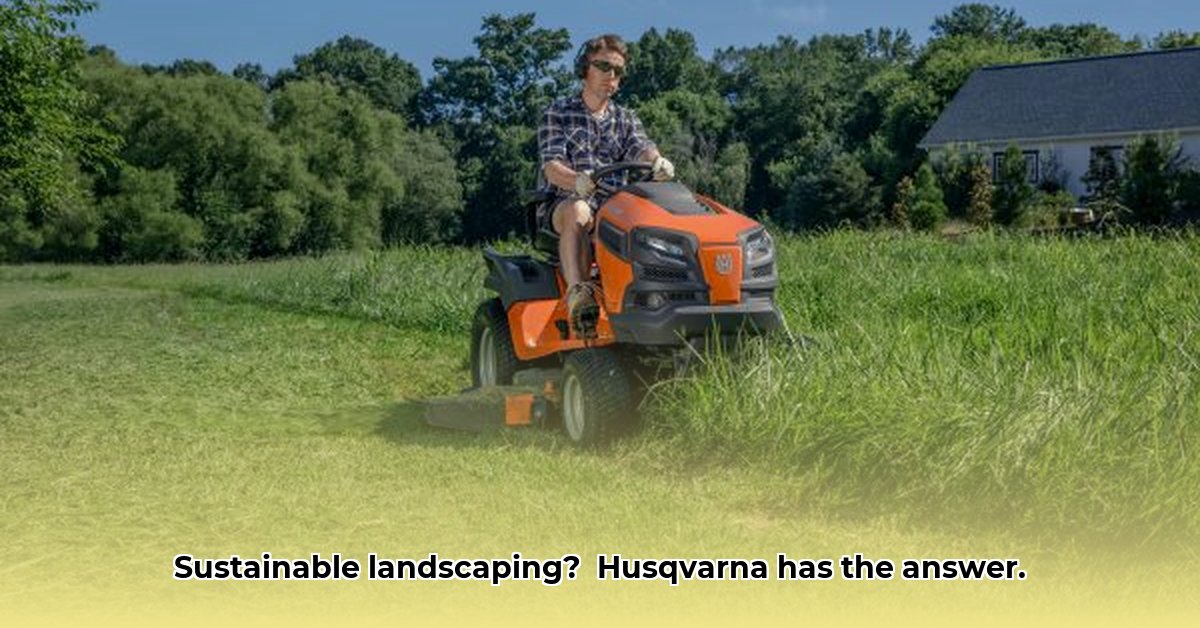
Choosing the Right Husqvarna Mower: Your Partner in Eco-Friendly Lawn Care
Selecting the right Husqvarna garden tractor is crucial for achieving sustainable landscaping goals. Prioritize models with mulching capabilities—this process finely chops grass clippings, returning nutrients to the soil and minimizing the need for chemical fertilizers. This natural fertilization process significantly reduces your environmental impact. Additionally, look for fuel-efficient engines to lower your carbon footprint and operating costs. Durability is key; a long-lasting machine reduces the need for frequent replacements, minimizing waste and promoting sustainability. Don't forget to check specifications such as engine horsepower, cutting deck width, and other relevant features. Reading independent reviews can also provide valuable insights from other users. For more information on Husqvarna tractors, visit Husqvarna Tractors. Isn't it empowering to know you're making an environmentally conscious choice?
Sustainable Mowing Practices: Optimizing Your Mowing Technique
Sustainable lawn care extends beyond the mower itself. Proper mowing techniques significantly contribute to environmental friendliness. Maintaining a mowing height of around 3 inches helps conserve soil moisture by shading the ground. Less frequent mowing allows the grass to grow slightly longer between cuts, resulting in stronger, healthier roots. Remember, mulching is vastly superior to bagging—it provides natural fertilization, eliminates messy grass clippings, and reduces waste. Beyond mowing, consider soil health. Regular soil testing helps determine necessary nutrients, allowing for responsible fertilization practices. Water deeply but less often to encourage robust root systems and conserve water.
Beyond the Mower: A Holistic Approach to Sustainable Landscaping
Sustainable landscaping is a holistic approach encompassing many factors beyond your chosen mower. Selecting the right grass type for your climate and soil significantly reduces the need for maintenance. Native grasses often require less water and fertilizer, further promoting sustainability. Sustainable weed control methods are also crucial. Explore natural approaches such as vinegar solutions or hand-weeding; while these require more effort, they eliminate the use of harsh chemicals. Finally, responsible disposal of your mower at the end of its life is a crucial step in minimizing your landfill footprint. Remember, many manufacturers now have programs to assist with responsible recycling.
Lifecycle Considerations: From Production to Disposal
The entire lifecycle of your Husqvarna tractor, from its manufacturing to its ultimate disposal, impacts the environment. While comprehensive data on the overall environmental footprint of specific models may be limited, focusing on durability is a key strategy. A longer-lasting mower significantly reduces the need for frequent replacements, thereby lowering the overall environmental impact. Researching different models and understanding manufacturers’ environmental commitments is a worthwhile exercise, even if complete data remains elusive.
Cost-Benefit Analysis: The Long-Term Savings
Investing in a high-quality, durable Husqvarna garden tractor and employing sustainable mowing practices offers significant long-term cost savings. While the initial purchase price might be higher than that of cheaper models, the longevity of a robust machine and reduced needs for fuel and chemicals will likely lead to substantial savings over time. The reduced environmental impact is an added bonus. This is a smart financial investment and a responsible environmental choice. This forward-thinking approach ensures a beautiful lawn while minimizing your environmental footprint.
Three Pivotal Points for Sustainable Lawn Care:
- Mulching: Reduces fertilizer needs, improves soil health, and minimizes waste.
- Fuel Efficiency: Lowers operating costs and reduces emissions.
- Durability: A long-lasting mower reduces waste and the need for frequent replacements.